


Next year, Singapore will be a “super-aged” society. One in five of us will be 65 years old or older. With that comes increased healthcare spending and thus taxation, which is highly unpopular.
Amidst this backdrop, you may have heard calls for Singapore to follow countries like the United Kingdom, Canada, Netherlands, New Zealand and other jurisdictions in legalising euthanasia, some of which even invoke our well-known pragmatism.
For instance, the Association of Criminal Lawyers of Singapore claimed that allowing euthanasia is “a logical progression and extension” of the Advance Medical Directive (AMD) that we already have.
But is this really the case? And should Singapore follow these countries?
What Is Euthanasia?


Euthanasia is the deliberate act of killing a person to relieve suffering, typically through a lethal drug cocktail. Euthanasia advocates would like you to believe that the closest thing we currently have is the AMD.
But the AMD is not ethically similar to euthanasia. The AMD withholds treatment that prolongs life beyond the limits set by the ailment. Euthanasia actively ends a life before that ailment does.
The AMD applies only when two strict conditions are met:
- The patient has a late-stage, incurable, and terminal illness where death is imminent.
- Further treatment only postpones the moment of death with no hope of recovery.
In such cases, the patient may request not to be kept alive through extraordinary means.
To conflate the AMD with euthanasia is to confuse allowing death with causing it.
But why is euthanasia wrong in the first place? Here’s why.
It Leads to Harm and Oppression


According to Jonathan Haidt, liberals place more weightage on care against harm, liberty against oppression, and fairness against cheating. They place less weightage on loyalty against betrayal, authority against subversion, and sanctity against degradation.
Meanwhile, conservatives place equal weightage on all six traits. This means they care more about loyalty, authority, and sanctity than liberals do. This is depicted in the matrices above, which can be accessed here.
Applying Haidt’s matrix to euthanasia, liberals sell euthanasia as care for patients by freeing them from suffering, as well as liberty in giving them the freedom to make choices about their own body.
But this comes at the expense of the sanctity of life. And ignoring that in the name of care and liberty leads to that very thing liberals avoid in harm and oppression, since this means killing the vulnerable, sick and elderly is now excusable. Here’s how.
Natural Law Theory Shows That Euthanasia Is Wrong
According to Natural Law Theory, life is a basic good. This means that life is a core part of being human, good in and of itself. Hence, life, no matter how difficult, is always valuable and should never be intentionally destroyed. Euthanasia violates this by turning life into something we can throw away when certain conditions are met.
Furthermore, euthanasia requires public participation. Doctors must approve it. Governments must regulate it. Society must endorse it. It’s not just your decision, it’s a legally sanctioned declaration that some people’s lives are no longer worth preserving.
Guess who else believed that?
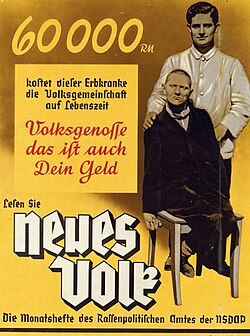
Using Autonomy To Justify Euthanasia Is Problematic
In a culture obsessed with autonomy, euthanasia is sold as a dignified way to “die on your own terms,” “avoid being a burden,” or “leave gracefully”.
But autonomy is not absolute. Laws restrict what we can do with our own bodies all the time. We already limit personal autonomy in countless areas:
- You can’t sell yourself into slavery.
- You can’t sell your organs even if you really need the money.
- You can’t do drugs just because you’re ‘willing to accept the risks’.
Why? Because autonomy isn’t the highest moral good – life is. That’s why the state steps in when someone tries to self-harm. Euthanasia is a radical exception to that rule. It says that the desire to die trumps protecting life.
These aren’t extensions of freedom. They’re legal permissions to kill, rebranded as compassion or choice. This tells us that autonomy isn’t the real principle at work here. The culture has simply decided that some lives no longer deserve protection.
Guess who else believed likewise?


Euthanasia Lets the Vulnerable be Seen as Burdens

Imagine a son who doesn’t care about his ageing, ailing mother, just her money. Won’t the possibility of euthanasia encourage him to tug at her heartstrings and coerce her to take it up so she won’t be a burden to him?
Or look at it from Grandma’s perspective. She’s old, ailing, and is willing to sacrifice anything for her kids. She doesn’t want to burden them emotionally and financially by seeing her suffer and having their inheritance swallowed up by her medical bills. What’s to say she won’t consent to euthanasia?
This isn’t hypothetical. It’s already happening without euthanasia, where financial worries deter seniors from seeking medical care.
Furthermore, it’s cheaper to kill a patient once than to keep caring for them until they die. This can tempt doctors to steer patients toward death, not just to cut costs, but to free up beds and staff.
Legal euthanasia pressures the elderly, the disabled, the mentally ill – people who already feel like burdens – to consider death as a valid option. “Am I being selfish by staying alive?” is a question no one should ever have to ask.
Euthanasia is Suicide Rebranded


If someone wants to die, we used to see that as a cry for help. Now, under euthanasia, it may be treated as a medically valid request. That’s a catastrophic shift in how we relate to the vulnerable.
Today, suicide is rightly mourned as a tragedy. We say, ‘This should never have happened.’ But with euthanasia, that response becomes optional, sometimes even reversed: ‘This should happen.’
And what about the family left behind? Their grief loses moral grounding. They may wonder if they’re even allowed to call it wrong.
We tell the suicidal: Don’t do it. You matter. Stay alive. But euthanasia says: Maybe you’re right. Maybe death is the answer.
Euthanasia is suicide rebranded – medicalised, sanitised, and bureaucratised. But once that door opens, where do we draw the line?
Legalising Euthanasia Is A Slippery Slope


Euthanasia is irreversible, leaving no room for regret. Final Solution much?
Likewise, once we violate the sanctity of life, what’s unthinkable today becomes normal tomorrow – and there’s no easy way back. Global data bears this out.
- Belgium legalised euthanasia in 2002 for adults with serious, incurable conditions, “unbearable suffering”, and left with “no reasonable treatment”. By 2014, it was extended to children of any age.
- Canada legalised euthanasia in 2016 for those with “unbearable physical or mental suffering”. From 2027, people suffering solely from mental illness will be eligible.
- In the Netherlands, what began as a measure for those with “lasting and unbearable suffering” with “no hope for improvement” now covers children and those with mental illness.
These countries all began with “tight safeguards” and said euthanasia was for “extreme cases”. But numbers rose year after year, and so did the categories of those eligible. What began as a rare exception soon became a broad entitlement.
The “slippery slope” isn’t alarmist. It’s accurate. If death is a right, and suffering is subjective, then every restriction is arbitrary. The reasoning behind euthanasia demands expansion.
Singapore won’t be the exception. It’ll just be late to the party.
Law Informs Culture


Legal permission signals cultural permissiveness. The message of “autonomy” won’t stay in parliaments. It’ll echo in hospitals, families, and policy. When the law treats life as disposable, so will everyone else.
For example, just before Canada legalised euthanasia, a poll found that 12% of Canadians believe that euthanasia should always be allowed. Just seven years later, that number has jumped to 20%. A separate survey found that opposition to allowing euthanasia for mental health conditions came down from 78% to 51%.
Overall, support for euthanasia has increased since it was legalised. Fewer also believe there should be plenty of safeguards restricting access to it.
Currently, Canada has one of the highest euthanasia rates in the world. More than 13,000 people took their lives in 2022, a 30% jump from the year before. Of these, 3.5% did not face terminal illness or imminent death.
These numbers paint a chilling picture: as euthanasia takes root, fewer Canadians draw the line, even when life is hard, not terminal.
So we must ask: on what basis are we authorizing the choice to die? If the answer is “suffering,” who defines what counts – physical pain, psychological weariness, social loneliness? If autonomy is absolute, then why deny it to the disabled, mentally ill, or the burdened poor?
Once death is a “treatment option,” the criteria for euthanasia will expand as they already have in places like Belgium and Canada. With that, the belief that we can end our lives when it feels unbearable spreads.
Soon, we’ll reach the logical conclusion that there’s no longer any reason to disagree that ending one’s life is a valid solution to suffering.
When Language Makes Evil Sound Good


In his book Street Smarts, Greg Koukl warns that “language, carefully chosen, can make evil look good and vice seem like virtue – with drastic consequences”.
Koukl cites Robert Lifton’s The Nazi Doctors to show how language can sanitise evil and make killing appear compassionate. Nazi doctors, sworn to preserve life, were persuaded to commit atrocities. How? Murder was redefined as “healing” and “therapy”.
Euphemisms like “The Reich Work Group of Sanatoriums and Nursing Homes”, “Children’s Specialty Department”, and “Welfare Ambulance Service” disguised the murder of children and the elderly, while Jewish genocide was framed as the “Final Solution”. Lifton calls this the “therapeutic imperative”, or killing in the name of healing.
This shows that words don’t just reflect values, they reshape them. When language turns killing into healing, societies cross a moral line where evil is not just permitted but praised.
Contemporary Examples


Many causes ground the “freedom” to kill and be killed in a “greater good”.
For example, people who defend abortion want you to believe that it is about the right to make decisions on one’s own body and preventing children from entering a world where they suffer or are unwanted. Meanwhile, places where the unborn are murdered are called “clinics” while the process is called “care”.
Sometimes, pro-choice people use extreme exceptions to justify making abortion the norm. They’ll invoke rape, incest, and mothers whose lives are in danger, even though they make up the vast minority of cases.
These are rhetorical strategies that frame killing as healing to disguise the fact that abortion murders unborn children. They tug at your emotions and make you look cruel for opposing the cruelty of abortion so that you’ll acquiesce.
Euthanasia follows the same script. Doctors who once swore to save lives now help end them, enabled by terms like “right to die,” “dying with dignity,” or “putting someone out of their suffering”.
Such terms frame killing as healing to disguise the fact that euthanasia kills the aged, sick and vulnerable. They tug at your emotions and make you look heartless and rigid for opposing it so that you’ll acquiesce.
After all, who cares about the “sanctity of life” when all we can see is poor old grandma suffering at every moment of hers?
The Suffering Would Rather Live Well


Yet the idea that the suffering want to die is a myth. Many of them want to live.
Take Louis Hood for example. Born with half a heart, he was given a 5% chance of survival even after surgery. Yet, he fought through three open heart surgeries and is still standing.
Vanellope Wilkins was born with her heart outside her body. Her chances of survival were “next to none”. Three surgeries later, she’s survived a condition with a 10% survival rate – and she’s not the first to do so.
Or look at baby Elkan. His skull was not developed, and doctors declared him “not compatible with life”. His long-term survival rate was 0%. Tragically, he passed away after only 6 hours. And yet, his dad said he “fought all the way”, while his mother testifies that he fought for his life even in her womb.
There’s also Mattie Stephanek. Born with a rare form of muscular dystrophy, he needed a wheelchair and a vast array of medical equipment just to survive and spent lots of time in pediatric intensive care units.
Yet not only did he beat the odds to live almost 14 years rather than the expected handful of hours, in that time he published seven New York Times bestselling books, held multiple ambassadorial roles, and inspired millions including Oprah Winfrey through his life, motivational speaking, and advocacy.
These people aren’t alone. There is an entire collective of people like them.
The fact that each of them instinctively fought for their lives from birth shows that the most basic human desire is to live. People do not “gain” a will to live. Instead, they are born with it, but might lose it if they feel hopeless. The message of euthanasia is that the cure for hopelessness is death. It presents death as intrinsically good, and the will to live as something to be dispensed with rather than restored.
In light of all this, surely there must be a better way to address suffering and pain.
A Better Alternative Exists

Marriage counsellors often advise couples to “take divorce off the table”, as keeping that option open undermines long-term marital resilience.
Could the same principle apply to euthanasia? If death is always an option, might we stop learning how to walk with others through the valley of suffering?
Euthanasia proponents want you to believe that terminally ill patients cannot “die well.” But this ignores the progress made by modern palliative care.
According to the Singapore Hospice Council, palliative care “aims to relieve suffering and improve quality of life… by caring for the ‘whole person’ physically, emotionally, psychologically and spiritually.”


In a country where euthanasia is not an option, healthcare systems are pushed to improve end-of-life care. When death is not on the table, we’ll focus on living and loving well to the end.
It Takes A Village

Instead of asking how we can help people die faster, why not ask how we can help them live better?
Why not invest in training, hiring, and retaining more palliative care specialists? Ensure that no one suffers alone or dies in despair? Create systems where no Singaporean feels like their only option is a lethal cocktail?
Rather than offering death as a solution, we must invest in palliative care. This is how we honour life: by journeying with those who suffer, not by eliminating them.
It is not compassion to abandon someone to death because we fear walking with them through pain.
We must also honour their caregivers. Most would rather continue caring for their loved ones than be asked to assist in ending their lives. We can and should provide support to help them do so, such as by offering help or providing reasonable living allowances.
We often say it takes a village to raise a child. Perhaps it also takes a village to care for the aged, sick and vulnerable.
The Long View

Singapore prides itself on pragmatic governance. But pragmatism must be guided by principle.
Euthanasia emerges from a hyper-individualistic vision of life where the self is sovereign and the body is property.
But in communitarian Asia, families bear one another’s burdens. We don’t send Grandma off with a prescription, we surround her. We don’t teach our young that life is disposable, we honour the aged, sick, and vulnerable.
Importing euthanasia is like importing fast food into a culture of home-cooked meals. The cost comes later, and it’s generational.
Euthanasia replaces care with convenience, treatment with termination, and dignity with despair. It reduces life to a cost-benefit analysis and turns suffering into a problem to be eliminated rather than a journey to be shared.
Euthanasia frames killing as healing. It may wear a medical veneer, but its goal of ending life fundamentally contradicts medicine’s purpose: to heal, comfort, and do no harm.
In a society that prizes efficiency, let’s remember that life is not a burden to be managed, but a gift to be honoured.
Singapore can do better than death on demand. And we must.


